Pest Control Professional Service (888) 217-8439

Service 02

Disinfection Service

Structured disinfection workflow for residential and industrial spaces focused on hygiene risks, high-touch areas, and contamination control.

Surface Safety Air Quality Focus Compliance Ready
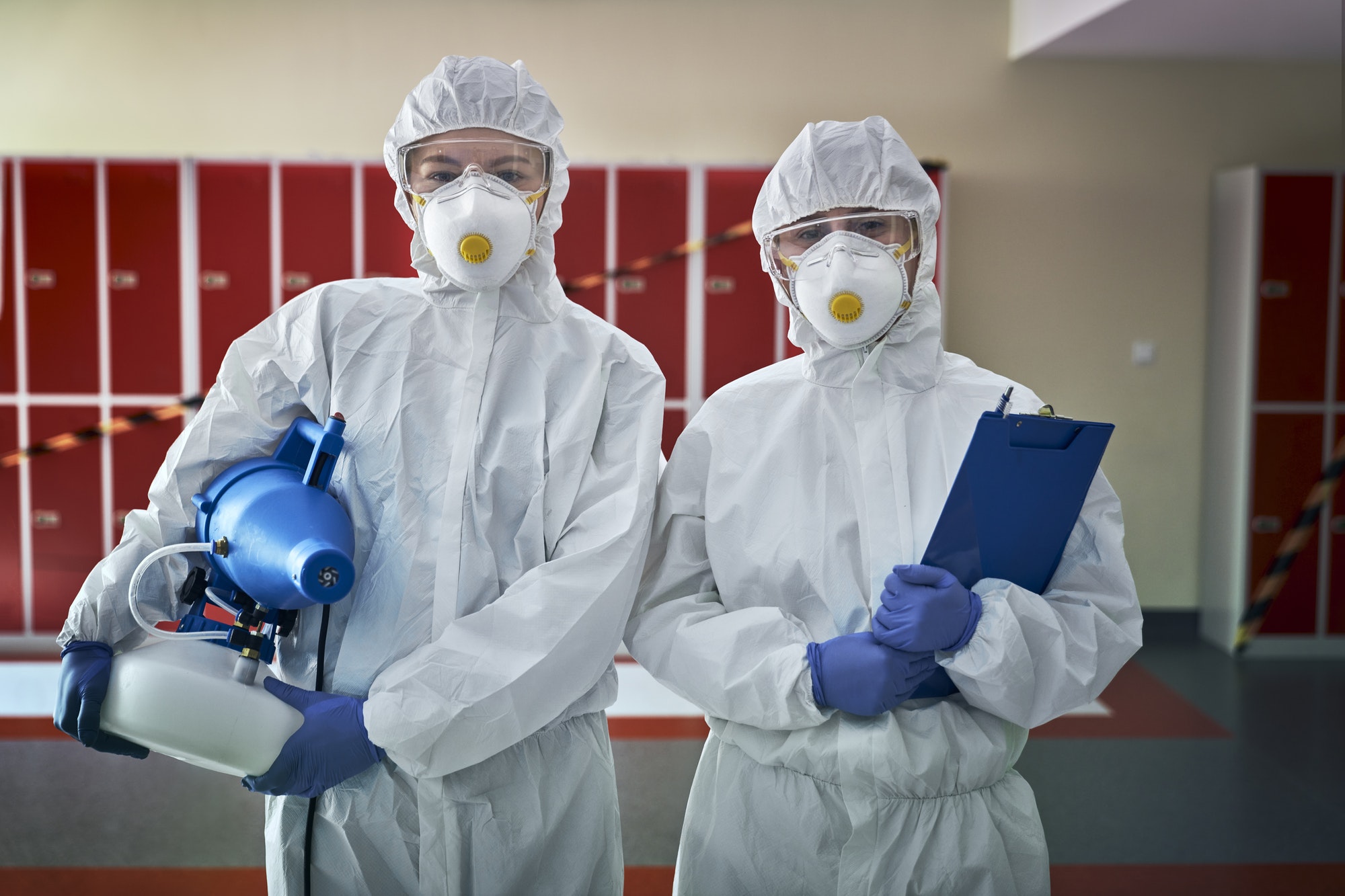
Team performing professional disinfection

When disinfection is needed

  • After visible contamination or odor spikes in enclosed zones.
  • During seasonal infection peaks or increased staff absence.
  • After maintenance events that exposed dust, moisture, or residues.
  • Before hygiene audits and operational restarts.

What this service covers

  • High-touch point treatment and room-wide disinfection strategy.
  • Sanitation planning for traffic routes and shared equipment.
  • Post-treatment checks and prevention recommendations.
  • Documentation for routine control and quality assurance.
24/7

Scheduling available for critical and after-hours operations.

Our workflow

01

Assess

Map hygiene risks, touchpoints, and airflow-sensitive areas.

02

Disinfect

Apply the right method per zone, material, and occupancy level.

03

Stabilize

Confirm results and set preventive routines for daily operation.

Detailed service explanation

How professional disinfection works in practice

Effective disinfection starts with zone logic. Not all rooms carry the same level of hygiene risk, so treatment should be prioritized by exposure intensity, contact frequency, and airflow behavior. Entry areas, shared handles, break spaces, sanitary points, and operational interfaces are usually mapped first. In technical environments, this includes service corridors, control panels, tool contact points, and packaging transitions.

A proper disinfection plan combines targeted and wide-area treatment. High-touch points need precision and repetition, while broad surfaces require stable and even application. Timing is also critical. In active facilities, scheduling must align with workflows to avoid contamination reintroduction right after treatment. This is why many programs are built around low-traffic windows, shift changes, or segmented area closures.

Material compatibility is another important part of professional execution. Surfaces vary in porosity, coating type, and resistance. Applying one universal approach can reduce effectiveness and increase wear over time. A controlled method selects products and application techniques according to each zone profile, then confirms consistency through verification checks. These checks help identify where additional attention is needed rather than assuming equal performance across all spaces.

Long-term value comes from prevention design. Without a follow-up routine, treated spaces can quickly return to unstable hygiene conditions. A sustainable model includes cleaning rhythm optimization, touchpoint rotation, and practical handling rules for staff. The objective is not only to sanitize once, but to maintain a lower contamination baseline over time. With this approach, facilities and homes stay cleaner, safer, and easier to manage during high-demand periods.
Client feedback

Recent disinfection reviews

"The process was organized and very clear. Our office felt cleaner immediately, and the follow-up recommendations were easy for the team to apply."

Portrait of Daniel Reed
Daniel Reed Office Administrator

"We needed after-hours disinfection for production zones. The service was punctual, structured, and our compliance check went smoothly."

Portrait of Sophia Bennett
Sophia Bennett Quality Coordinator

"Great communication and minimal disruption at home. High-touch areas were handled in detail, and the space smelled fresh without strong chemical residue."

Portrait of Emma Collins
Emma Collins Homeowner

FAQ: Disinfection service

How often should disinfection be performed?

Frequency depends on traffic, surface contact intensity, and hygiene standards. High-use facilities often require scheduled recurring treatment.

Is one treatment enough for long-term control?

One cycle can reduce immediate pressure, but stable results usually need preventive routines and targeted repeat intervals.

Can disinfection be done after working hours?

Yes. Many programs are arranged for low-traffic windows to reduce disruption and support safer restart timing.

Do all zones need the same method?

No. Effective planning adapts treatment to room function, surface type, and risk profile.

Disinfection strategy for residential and commercial hygiene

Structured disinfection programs help reduce contamination pressure by combining targeted touchpoint treatment with area-based hygiene control. This approach supports cleaner, safer, and more predictable daily operation.

Facilities that integrate disinfection with routine monitoring and staff protocols usually improve audit readiness and lower emergency sanitation costs over time.