When ozone treatment is useful
- Persistent odor after contamination or moisture incidents.
- Enclosed spaces with recurring stale-air problems.
- Post-service hygiene stabilization in technical rooms.
- Pre-opening refresh in storage and utility areas.
Service 05
Ozone-based air treatment for odor reduction and hygiene stabilization in enclosed areas with controlled, safety-oriented operation.
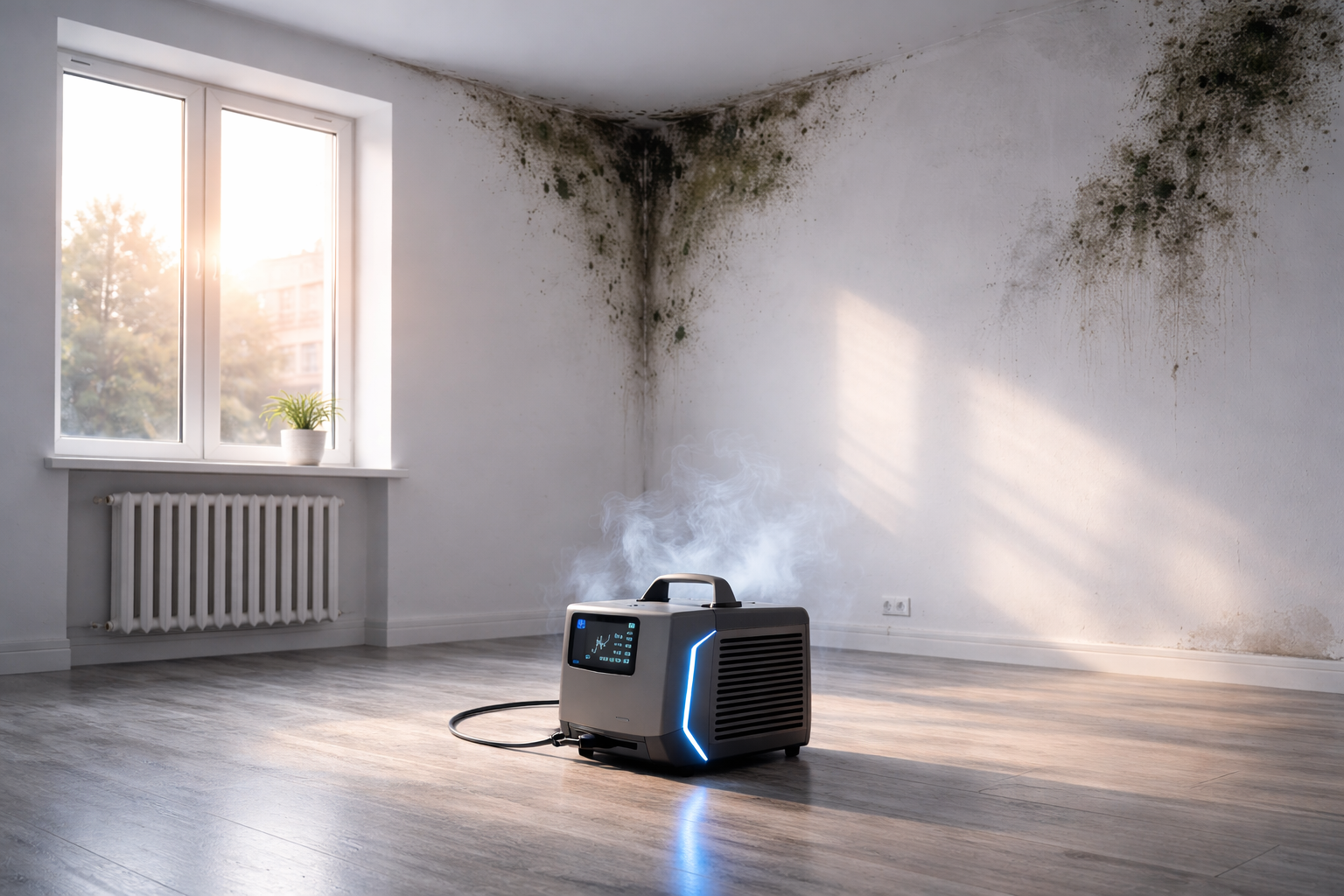
Assess, treat, ventilate workflow with controlled timing.
Map room volume, airflow behavior, and sensitive points.
Run ozone cycle with controlled exposure and safety barriers.
Clear air path and confirm safe re-entry conditions.
Detailed service explanation
Ozone treatment is used as a controlled environmental method for enclosed spaces where persistent odor and hygiene instability remain after standard cleaning routines. The process is most effective when it follows a clear sequence: pre-assessment, calibrated treatment, and full ventilation. Without this sequence, results can become inconsistent, especially in rooms with complex airflow and multiple hidden surfaces.
Pre-assessment defines key parameters such as room volume, material sensitivity, and air circulation patterns. It also determines occupancy restrictions and safe re-entry timing. During treatment, exposure control is critical: concentration and duration must be matched to the room profile. Overexposure is not a quality marker; precision is. Properly executed cycles support odor reduction and improve perceived air freshness across hard-to-reach zones.
Ventilation is the final mandatory stage. After active treatment, the area is aired out and checked before normal use resumes. This step ensures safety and process closure. For best long-term results, ozone treatment should be integrated with preventive routines such as moisture control, targeted cleaning cadence, and source-point hygiene management.
In both residential and operational spaces, structured ozone programs help reduce repeated odor episodes and support cleaner baseline conditions. When applied with clear protocol and realistic scheduling, it becomes a reliable part of broader hygiene strategy.
Client feedback
"Great result in a hard-to-manage basement area. The odor was significantly reduced, and the process steps were explained very clearly."

"Professional setup and strong communication with our team. Treatment and ventilation were well coordinated with office hours."

"We use this service after periodic sanitation cycles. It helps keep air quality stable in enclosed production-adjacent spaces."

It is commonly used for persistent odor reduction and hygiene stabilization in enclosed rooms where standard cleaning has limited effect.
Yes. Controlled ventilation and readiness checks are essential before normal occupancy resumes.
Yes. Offices, technical rooms, and operational support zones can be treated when process timing and safety windows are properly planned.
Repeat frequency depends on source conditions such as moisture, airflow, and occupancy patterns in the treated space.
Ozone treatment is most valuable as part of a broader air-quality strategy that includes source control, moisture management, and scheduled preventive checks.
With proper planning and controlled execution, ozone cycles can support cleaner baseline conditions and reduce repeated odor events in both residential and commercial spaces.