Signs of rats or mice at home
- Small dark droppings on floors or kitchen surfaces.
- Gnawed wires, furniture edges, or food packaging.
- Damage to insulation and hidden wall cavities.
- Night sounds: scratching, squeaking, movement in ceilings.
Service 01
Advanced rat and mouse control with sealing, sanitation, and preventive monitoring for long-term protection.
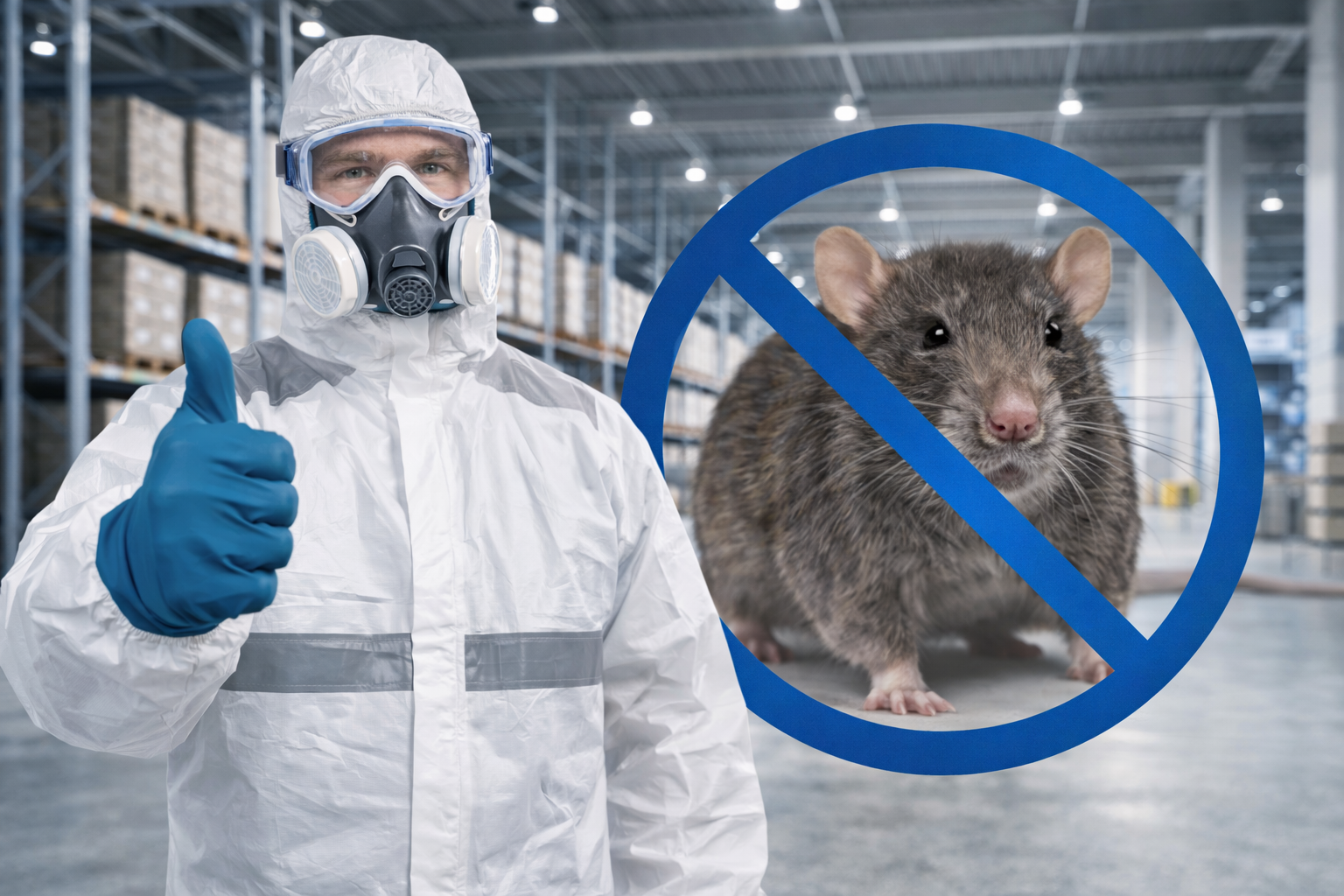
Activity reduction after complete treatment cycle.
Locate entry points, nests, and contamination pathways.
Apply targeted control methods with minimal disruption.
Seal vulnerabilities and keep monitoring active.
Detailed service explanation
Rodent control is most effective when it is treated as a full system, not a one-time action. In practical terms, the process starts with behavior mapping: specialists check where rodents travel, where they feed, and where they hide during low-activity hours. This phase includes tracing wall lines, utility entries, basements, crawl spaces, storage rooms, roof voids, and waste zones. The goal is to identify pressure points rather than only visible signs. Small details matter: smear marks near edges, gnaw traces around soft materials, hidden droppings near heat sources, and airflow paths that can carry odor and food cues.
After mapping, a targeted intervention plan is built. Instead of applying the same method everywhere, the treatment is matched to risk intensity, access type, and occupancy level. In sensitive spaces, low-disruption methods are prioritized. In high-traffic technical zones, secure monitoring stations are installed in a grid that allows measurable tracking. Entry-point sealing is a critical part of this stage. Without structural correction, elimination alone does not hold. Gaps around pipes, cable routes, facade joints, and door thresholds are reinforced using appropriate barrier materials. This step is what converts a short-term result into a long-term one.
Follow-up is equally important. Rodent activity can shift after initial pressure is applied, so control points are rechecked and adjusted over time. Data from monitoring points helps confirm whether activity is dropping or simply moving to adjacent zones. A professional program also includes sanitation guidance, because food residue, moisture, and clutter can quickly recreate attractive conditions. The best outcomes come from combining control, exclusion, and site habits into one clear routine. When this sequence is respected, the risk curve drops significantly and remains stable.
Another key element is communication. Occupants or facility managers receive practical, non-technical guidance: what to watch for, which areas to keep accessible, and how to maintain prevention barriers between scheduled checks. This keeps the property protected even after the main intervention phase. Effective rodent removal is therefore not only about removing current activity; it is about designing conditions where new activity has no easy path to return.
Client feedback
"We had scratching in the walls for weeks. After inspection and sealing, the noise stopped within days. The follow-up plan was clear and practical."

"The team mapped every weak point around our warehouse. We finally got a system instead of temporary fixes, and monitoring reports are easy to track."

"Fast response, professional communication, and no disruption for our staff. The site is clean, safer, and fully under control now."

First reduction often appears quickly, but full stabilization may require staged follow-ups depending on access points and nesting conditions.
Re-entry happens when structural gaps remain open or food/moisture attractants are not controlled after the initial intervention.
In many properties, yes. Monitoring verifies whether pressure is truly decreasing and helps detect hidden migration paths.
Consistent prevention lowers cable damage, contamination risk, and insulation loss while improving long-term safety.
Rodent activity can escalate silently in walls, technical voids, and storage zones. A prevention-based program combines exclusion, monitoring, and sanitation to keep pressure from rebuilding after treatment.
Properties that maintain regular checks and entry-point maintenance usually experience fewer repeated incidents and more stable indoor conditions across seasonal changes.